Juneteenth Breaking Chains: A Designer's Review
As a designer who spends more time staring at stitch maps than most people spend looking at their phones, I approach every new machine embroidery design with a mix of excitement and skepticism. We have all been there: you download a file that looks stunning on the screen, only to find out that the stitch density is too high for a soft baby onesie or the lettering turns into a tangled mess on a textured towel. Today, I am putting the JUNETEENTH BREAKING EVERY CHAIN SINCE 18 graphic under the microscope. This isn't just about whether it looks good; it is about whether it holds up when you are trying to run a craft business or create a meaningful personalized gift for a client.
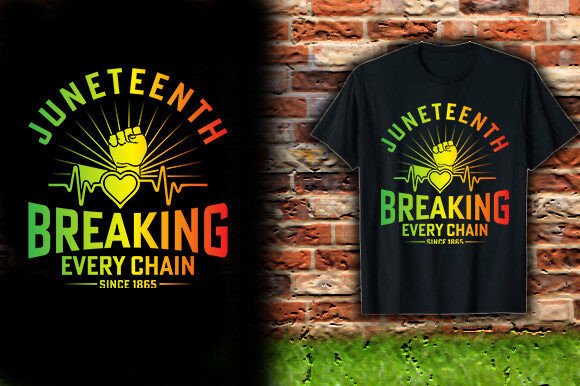
The first thing that strikes me about this piece is its mood. Juneteenth is a heavy, historical, and celebratory topic, and the typography here reflects that weight without being oppressive. The phrase "Breaking Every Chain" suggests movement and liberation, which needs to translate well into thread. When I visualize this as a finished product, I see it working exceptionally well on structured items. Imagine a heavy canvas tote bag design intended for a community market or a boutique shop. The boldness of the text would stand out against natural cotton, making a strong statement. However, because this originates as a T-Shirt Designs category item, we have to be careful about how we adapt these Graphics for the hoop.
Real-World Application: The Sweatshirt Scenario
Let's walk through a real-life scenario. Suppose you are an Etsy seller preparing for the June rush. You decide to use this design on a premium heavyweight sweatshirt. This is a classic sweatshirt embroidery project where durability matters. The layout of JUNETEENTH BREAKING EVERY CHAIN SINCE 18 is relatively linear, which is great for chest placements. If you are digitizing this yourself from the provided graphic, you would likely want to lean into a combination of fill stitch for the larger block letters and perhaps a satin stitch for any finer details or outlines to give it definition.
The visual personality of this design screams "heritage." It feels appropriate for a small shop product that aims to educate as well as decorate. If I were stitching this for a customer, I would be thinking about the thread colors immediately. While the traditional Pan-African colors (red, black, green) are obvious choices, testing this in a monochromatic scheme—say, gold thread on a navy hoodie—could elevate it from a standard holiday item to a piece of high-end custom apparel. The key here is contrast. Since the design relies on text, if your fabric texture is too busy or the thread color blends too much with the garment, the message gets lost. Always test your printable mockup in black and white first to ensure the shapes read clearly before you ever thread the needle.
Navigating Fabric Challenges and Hoop Sizes
One of the biggest hurdles with text-heavy digital embroidery file conversions is the small details. The year "18" (referencing 1865) is a crucial part of the historical context. In a large hoop, this is fine. But what happens if a customer wants this on a cap or a small embroidered patch? This is where you need to exercise professional judgment. If the original graphic has thin lines connecting the letters or intricate breaks in the chain motif, those might not survive a downsize without significant manual editing.
If you are working with stretchy fabrics like jersey knits for baby embroidery projects, you must be vigilant. A dense design can cause the fabric to pucker, ruining the drape of a onesie. For these applications, I recommend using a cut-away stabilizer rather than tear-away. The goal is to support the weight of the stitches permanently. Furthermore, curved surfaces like baseball caps present their own challenges. The curvature can distort straight lines of text. If you attempt JUNETEENTH BREAKING EVERY CHAIN SINCE 18 on a hat, ensure your digitizing software accounts for pull compensation, or the text might look like it is arching incorrectly.
Dark fabrics are another consideration. If you are stitching on black denim or dark fleece, you cannot rely on the background to define the edges of your letters. You may need to add a running stitch outline or increase the spacing between characters slightly to prevent the threads from merging into a solid blob. This is especially true for the word "CHAIN," where the links might be visually close together. A quick test run on scrap fabric of the same weight and texture as your final product is non-negotiable. It saves you from wasting expensive blanks and protects your reputation as a maker.
Commercial Viability and Brand Consistency
For those of us selling design assets or finished goods, the commercial potential of this piece is tied to its versatility. Does it fit your brand? If your handmade product line focuses on social justice, history, or community empowerment, this design is a natural fit. It adds value because it tells a story. Customers are increasingly looking for meaning in their purchases, and a well-executed embroidery project speaks to quality and intention.
However, we must address the source material. The product description notes experience with Amazon, Shopify, and Redbubble, which implies this is primarily a print-ready graphic. As an embroiderer, you are taking a 2D image and translating it into a 3D textile art form. There is no automatic guarantee that the applique design potential is already mapped out. You need to verify the licensing terms explicitly. Just because a file is available for purchase does not automatically grant you the right to sell thousands of stitched units or resell the digitized file itself. Always confirm the license before listing items in your online store.
When considering holiday embroidery beyond just Juneteenth, think about longevity. A design that says "Since 18" is timeless in its historical reference, unlike a design that says "Juneteenth 2024." This makes it a safer investment for your inventory. You can stitch these in batches for commercial embroidery orders without worrying about them becoming obsolete next year. It works well for nursery decor, such as a framed hoop art piece or a pillow cover, where the educational aspect is valued by parents.
Final Thoughts on Execution
In conclusion, JUNETEENTH BREAKING EVERY CHAIN SINCE 18 offers a strong foundation for a variety of projects, from kitchen towel gifts to boutique apparel decorators showcasing their skills. Its strength lies in its clear message and bold composition. However, its success depends entirely on the executor's attention to detail. Do not treat it as a simple "click and stitch" operation. Respect the history it represents by ensuring the execution is flawless.
- Always check the hoop size requirements against your machine's capabilities before starting.
- Review the stitch density to ensure it matches your fabric weight.
- Test different thread colors to find the best contrast for your specific material.
- Inspect small details like the numbers and chain links for clarity after stitching.
- Confirm licensing terms for both personal and commercial embroidery use.
By treating this graphic with the care it deserves, you can turn a simple digital file into a powerful finished product that resonates with customers and honors the spirit of freedom. Whether you are a hobbyist making gifts for family or an entrepreneur building a brand, let the quality of your stitching reflect the importance of the message.